KNOW WHAT’S UNDER YOU
The Tire Center
See how tires work. Understand what to check.
Know what information helps us help you.
What would you like help with?
Damage, wear & replacement
Repairable vs. non-repairable punctures
Proper plug-and-patch repair fixes the hole through the tire and seals the inside after removal and inspection.
Explore the guideTread depth & replacement warning signs
The patterned rubber touching the road is the tread.
Explore the guideTire age & DOT date codes
Speedy J’s recommends replacement at 6 years from manufacture, or every 3 years for trailer tires. Tires 10 years old or older are non-serviceable.
Explore the guide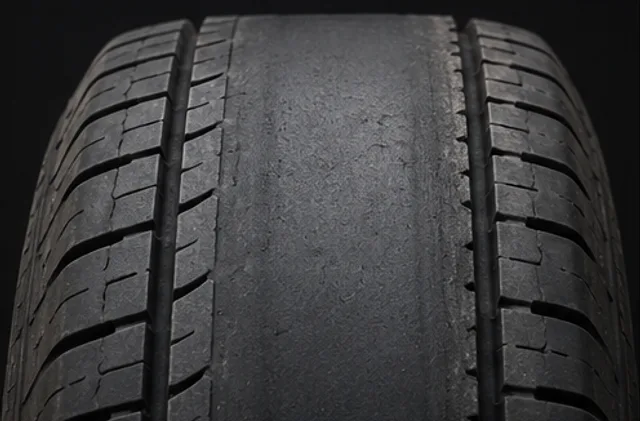
Tire wear patterns
Look at where rubber is wearing away: the middle, both outside edges, one edge, or repeating spots around the tire.
Explore the guideTire noise
A new hum, thump or other persistent sound deserves attention.
Explore the guidePressure & TPMS
Proper tire pressure
Use a gauge to measure how much air pressure is in the tire.
Explore the guideTPMS basics & warning lights
The tire-pressure warning light is part of TPMS, the Tire Pressure Monitoring System.
Explore the guideTPMS faults, relearn & calibration
Some vehicles use small sensors at the wheels to measure pressure; this is direct TPMS.
Explore the guideUnderstanding & choosing tires
Finding and reading tire size
Look on the side of the tire, called the sidewall, for the complete size marking.
Explore the guideTire anatomy
You are looking at a tire with part of it opened up to show the layers.
Explore the guideLoad index & load range
The number after the tire size tells you how much weight one tire is designed to carry under its specified conditions.
Explore the guideSpeed ratings
The letter after the weight-capacity number is the Speed Rating.
Explore the guidePassenger vs. LT tires
Passenger tires are made for passenger-vehicle use; some pickups and SUVs correctly use them too.
Explore the guideChoosing road, all-terrain or mud-focused tires
Start with where you drive and what you need: road comfort, mixed road/off-road use, mud, or seasonal traction.
Explore the guideTrailers & towing
Maintenance & mobile service
Tire rotations
Rotation means moving tires and wheels between permitted positions on the vehicle to help spread wear.
Explore the guideMounting, balancing & alignment
A properly balanced tire and wheel has its weight distributed correctly as it spins.
Explore the guideWheel-fastener torque
The wheel must be held firmly against the vehicle by the correct nuts, bolts or other threaded hardware.
Explore the guidePreparing for mobile service
Tell us what needs service, where it is and what you are noticing.
Explore the guide