TIRE CENTER · Damage, wear & replacement
Tread depth & replacement warning signs
Tread depth changes wet-weather performance
The patterned rubber touching the road is tread. Its grooves give water space to move away. As they become shallow, wet braking can decline and hydroplaning—losing proper road contact on water—becomes more likely.
Replace before the wear bars
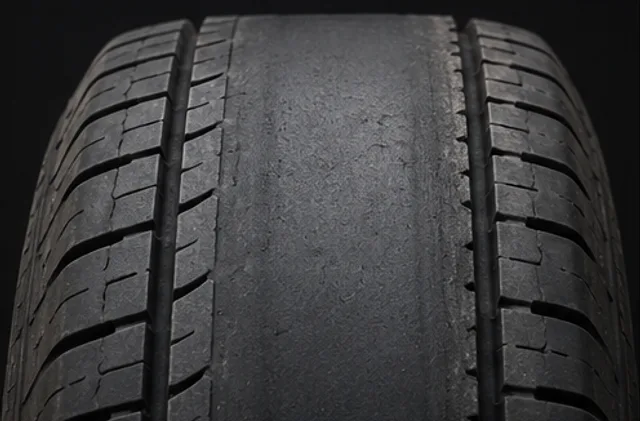
Measure the worn areas
Indicator below tread
Indicator flush with tread
Gauge: measure the groove
Use several readings, not the best-looking one
- Compare accessible inner, center and outer areas and several places around the tire.
- If one area is more worn, do not use a deeper reading elsewhere to dismiss it.
- Use the replacement guidance above for the worn area; ask for inspection if readings or surface cracking are uncertain.
Damage versus a symptom to investigate
Two different reasons to act
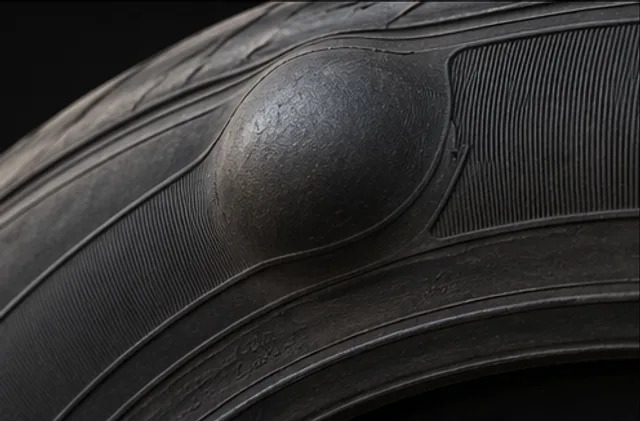
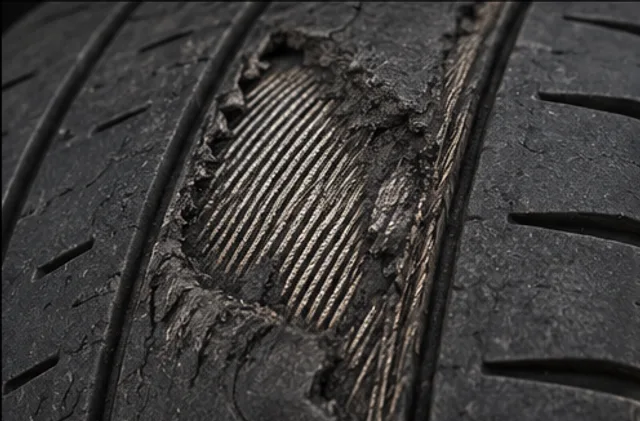
VISIBLE SERIOUS DAMAGE · REPLACEMENT REQUIRED
Structural bulge / impact break, exposed cords or severe structural/tread damage: unserviceable, replacement required. Do not continue normal driving; arrange appropriate assistance. The cause may also need investigation.
NEEDS INVESTIGATION
New vibration, unusual noise, repeated pressure loss or ordinary irregular wear without terminal damage: inspect the cause. These symptoms alone do not automatically mean replacement.
Sources and Technical Notes
Technical concepts reviewed 2026-10-11. Actual application instructions remain controlling.
- NHTSA TireWise (opens in a new tab)
- Michelin: when to replace tires (opens in a new tab)
- Bridgestone: tread checks and wet-weather performance (opens in a new tab)
- Michelin: sidewall damage and replacement (opens in a new tab)
- Michelin FAQs: exposed cord material requires replacement (opens in a new tab)
Application-specific details and scope
The 4/32-inch passenger-road replacement recommendation is Speedy J’s policy, not a universal legal minimum or a guaranteed traction boundary. NHTSA’s commonly referenced 2/32-inch/flush-indicator end-of-service guidance concerns passenger tires, not a universal commercial or specialty specification. At that threshold, the tire is worn out and is no longer serviceable by Speedy J’s.
A structural outward bulge / impact break differs from a normal cord-overlap sidewall indentation. Surface cracking needs assessment; not every cosmetic mark indicates terminal damage.