TIRE CENTER · Damage, wear & replacement
Tire wear patterns
Where is the rubber wearing away?
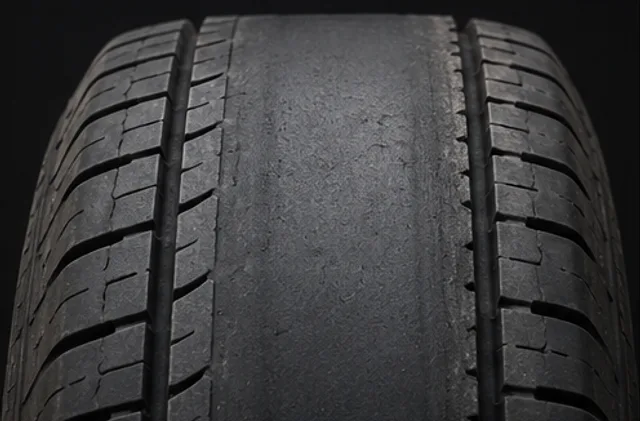
Wear patterns direct checks; a photo alone does not prove a cause. The shoulders are the tread’s outside edges. Alignment means wheel angles; toe is inward/outward pointing viewed from above. Suspension supports and controls wheel movement. These passenger/light-truck examples can have different contributors in other applications.
Even baseline
Center strip
Both shoulders
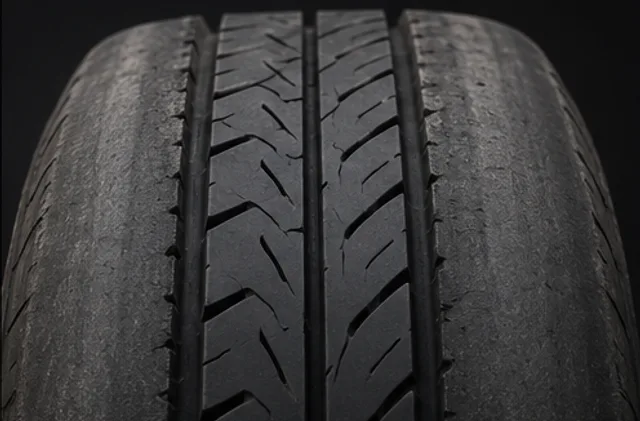
One edge
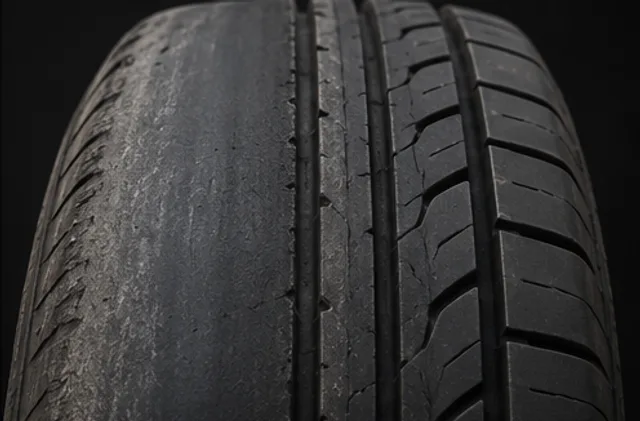
Repeated low spots
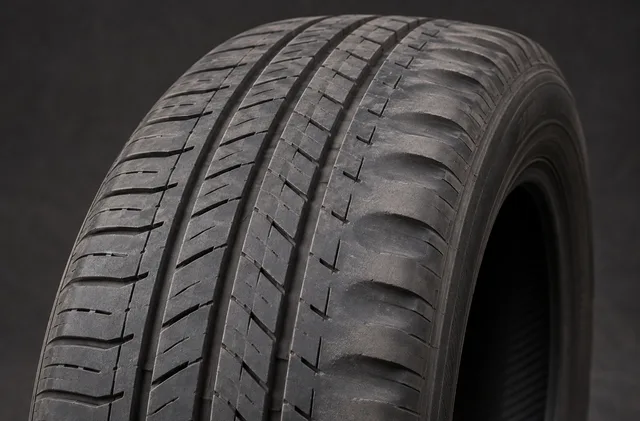
Unequal block edges
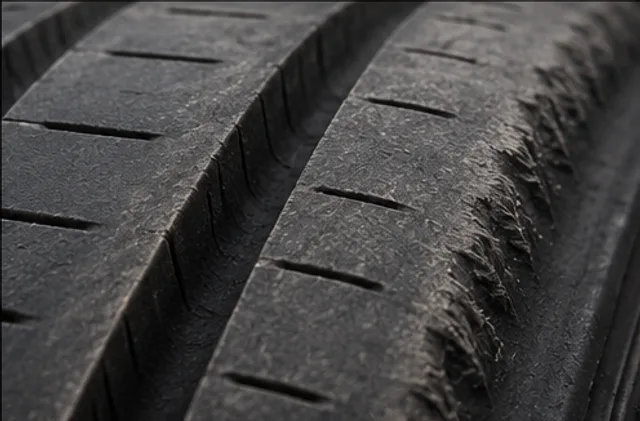
Use the pattern to investigate
One edge is lower than the rest
- Compare actual depth readings across the tire and around it.
- Report which edge is worn, any pulling/vibration and recent changes.
- Have the relevant alignment, suspension or mechanical conditions checked. Speedy J’s does not perform wheel alignments.
Decide serviceability and address the cause
The center, shoulder and edge photos show substantial localized wear. Speedy J’s recommends replacing passenger-road tires at 4/32 inch of remaining tread; do not wait for the wear bars. At 2/32 inch—or when tread is flush with the wear indicators—the tire is worn out and is no longer serviceable by Speedy J’s. Exposed cords, a structural bulge / impact break or severe structural/tread damage make the tire unserviceable and require replacement.
Finding the cause remains necessary even when replacement is already needed. Rotation cannot put rubber back, and new tires alone do not correct abnormal wear’s cause. Share useful tread photos and vehicle/equipment details.
Sources and Technical Notes
Technical concepts reviewed 2026-10-11. Actual application instructions remain controlling.
- Michelin: wear problems (opens in a new tab)
- Continental: tire damage, center-wear contributors and impact breaks (opens in a new tab)
Application-specific details and scope
Pressure, load, fitment and mechanical conditions can interact. Passenger/light-truck wear examples do not establish the same cause for commercial or specialty equipment.