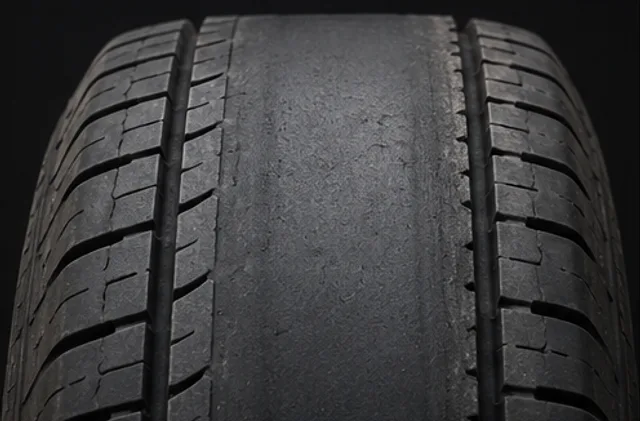
Rotation moves tire/wheel assemblies between permitted vehicle positions to help distribute wear; it does not balance them or restore lost rubber. Use the vehicle/tire instructions for pattern and timing, not drivetrain alone.
Directional sidewall marking
A directional tire carries a specified rolling-direction arrow. Preserve the required direction in a permitted rotation pattern.
Asymmetric mounting marking
INSIDE / OUTSIDE identifies the required mounted side. Asymmetry alone does not universally prevent crossing sides.
Apply the markings to permitted positions
Equal-size, nondirectional
Example forward-cross: fronts straight back, rears cross forward. Only when the actual instructions allow it.
Equal-size, directional
Same-side front/rear exchange: preserves the direction on mounted assemblies when permitted.
Staggered sizes
Different front/rear sizes restrict interchange. No front/rear exchange is shown; actual instructions control.
If wear is unusual
Inspect the underlying cause rather than expecting rotation to fix it. No one pattern or interval applies to every vehicle, tire and size setup.
Sources and Technical Notes
Technical concepts reviewed 2026-10-10. Actual application instructions remain controlling.
Published general rotation intervals can differ by vehicle, tire and warranty program. The actual maintenance/warranty instructions control, including rolling direction, mounting orientation and size restrictions.