TIRE CENTER · Understanding & choosing tires
Tire anatomy
See the parts in a tire cutaway
This example opens up a typical radial tubeless passenger/light-truck tire—one that holds air without a separate inner tube. Specialty constructions may differ. Follow the numbers to the readable key.
A tire opened up: see the parts in place
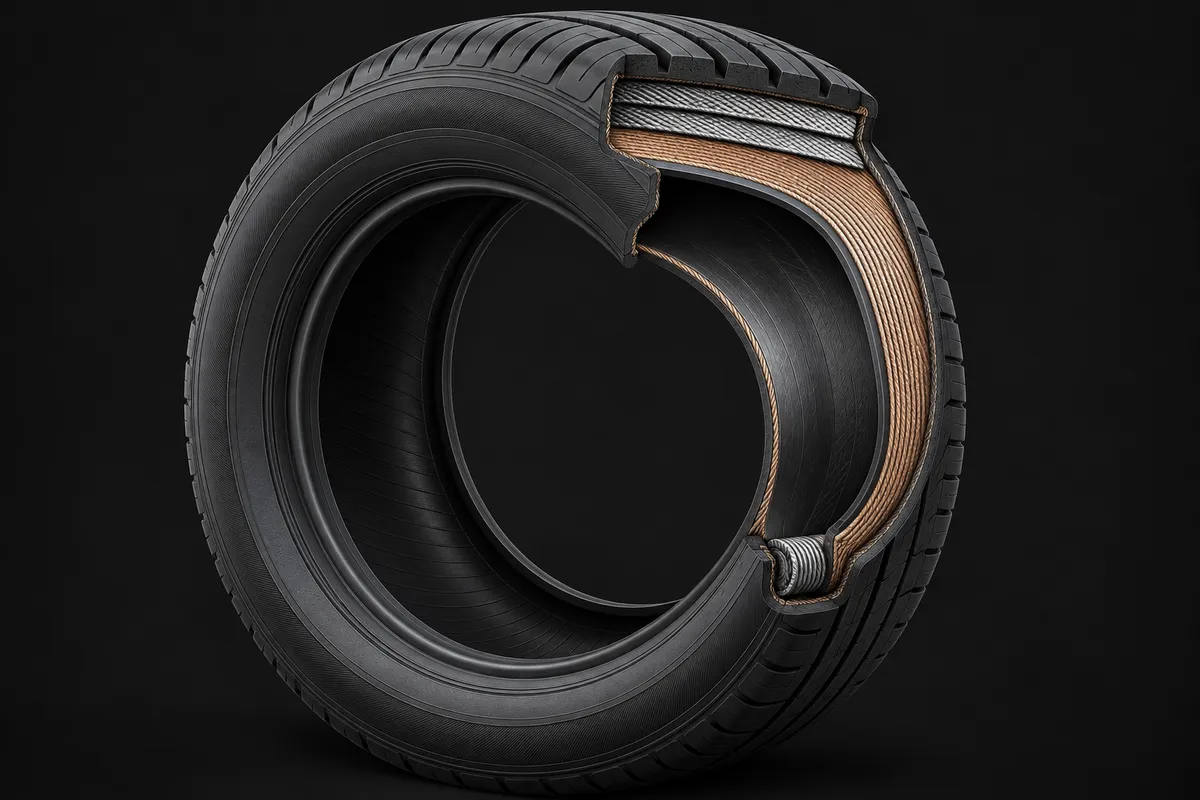
Match the numbers
- Tread: road contact
- Shoulder: tread-to-sidewall transition
- Sidewall: flexible outer protection
- Belts: reinforcement beneath tread
- Body plies: reinforcing layers forming the tire body
- Inner liner: air-holding inside surface
- Bead: reinforced edge sitting against the wheel
Extra supporting rubber, called the bead apex when present, belongs near the reinforced wheel-seating edge—not under the tread. Construction varies.
Why inside and outside matter
2 · Injury route inside
The same puncture seen from two sides
- Outside, only a small tread entry is visible.
- Follow its angled path through the reinforcing layers in the cutaway.
- Internal inspection checks what the outside view cannot confirm.
Damage location and construction affect the service decision; see the puncture guide for repair eligibility and method.
Sources and Technical Notes
Technical concepts reviewed 2026-10-10. Actual application instructions remain controlling.
Application-specific details and scope
Continental identifies the bead apex as a stabilizing rubber wedge in the bead area. Materials and layer arrangements vary by construction; a tubeless inner liner reduces air loss but is not an absolute seal guarantee.