ESSENTIAL
Not included in this teaching example
Start with the whole tire. Explore what is inside, then compare three educational construction examples. The layers are only part of the story—rubber compounds and the job matter too.
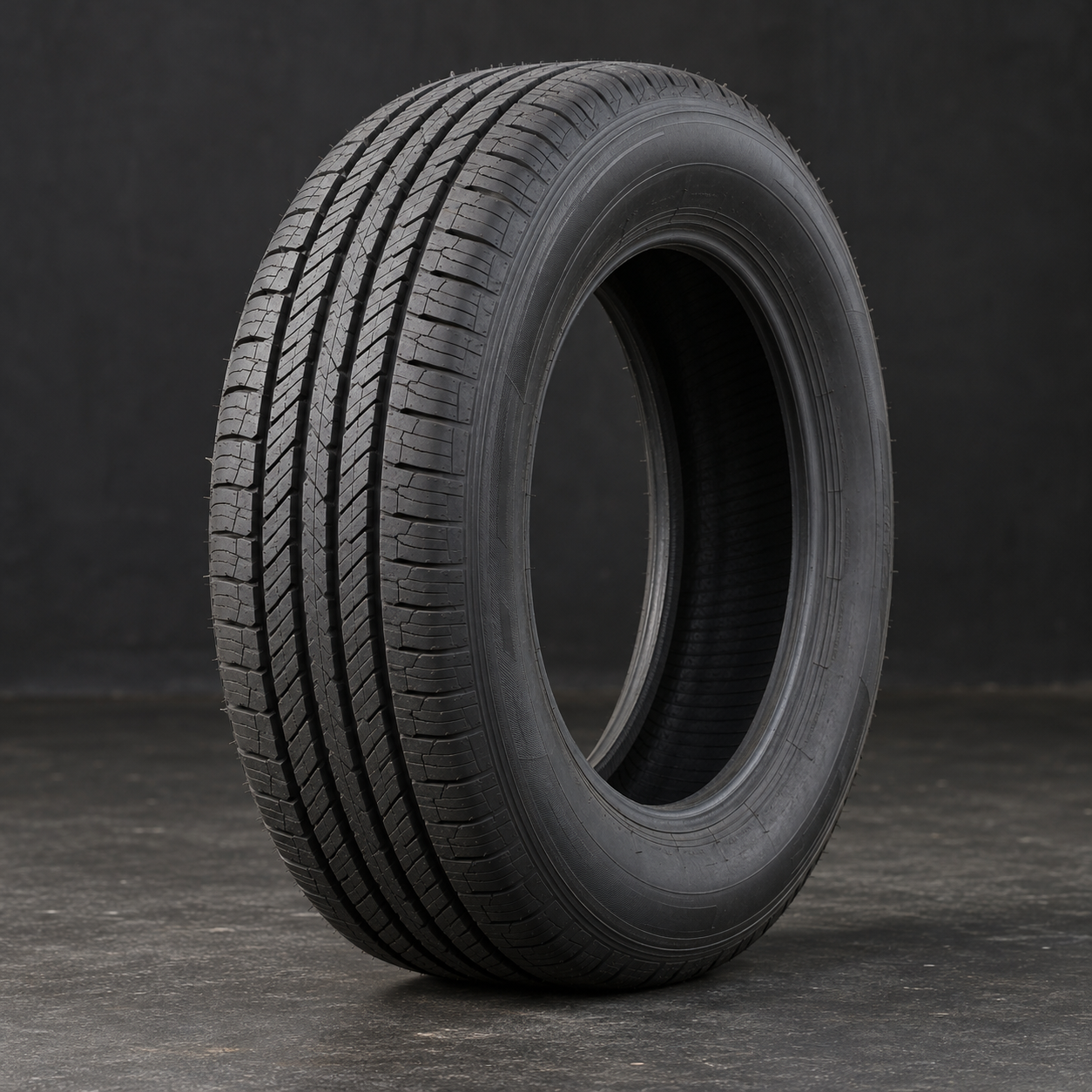
A complete passenger-tire educational example, before any part is selected.
Brings the tread, reinforcement, casing, liner and bead structure together.
The parts work as a system. Counting layers cannot tell you whether a tire suits your vehicle or use.
Actual construction varies by manufacturer, model, size, load/application and engineering design. These examples are not industry grades; Essential is not inherently a bad choice.
See additions across the three teaching examples. A missing component is shown as absent, never as a ghosted or invented part.
Not included in this teaching example
Not included in this teaching example
A complete passenger-tire educational example, before any part is selected.
Brings the tread, reinforcement, casing, liner and bead structure together.
The parts work as a system. Counting layers cannot tell you whether a tire suits your vehicle or use.
Actual construction varies by manufacturer, model, size, load/application and engineering design. These examples are not industry grades; Essential is not inherently a bad choice.
Essential, Durable and Premium are Speedy J’s educational construction examples, not universal industry grades or specifications for every tire in a price category. Actual construction varies by manufacturer, model, size, load/application and engineering design. The correct tire depends on the complete design and intended application. More components do not automatically guarantee safety, quality, mileage or suitability. Highlight colors identify parts, not literal material colors.
Essential shows one steel belt; Durable shows two; Premium adds nylon/polyamide cap reinforcement and paired belt-edge inserts. Common tread, casing, liner, sidewall and bead components remain available across all three. The Premium example describes a more developed bead/apex/support package. The Bead Apex / Filler comparison uses three separately approved support illustrations; the highlighted progression is rubber apex/filler shape and extent, while the bead-wire bundle stays consistently sized. These are not universal apex dimensions or exact proprietary manufacturer geometry. Individual exploration retains its previously approved artwork.
The crown, side-oriented and interior views use only locked owner/technician-approved art. Detail enlargements show the same image, not replacement anatomy. Belt numbering identifies layers within these teaching views, not manufacturer assembly identifiers. Reveals are educational, not repair instructions or dimensional specifications.
Conventional anatomy references: Continental components · Goodyear definitions · Bridgestone terminology · Michelin glossary · Cooper construction reference · Ply turn-up manufacturing reference. Illustrations are teaching examples, not evidence of a real tire model’s proprietary construction.
THE BUILD IS ONLY PART OF THE STORY
A tire is not made from one generic rubber. A rubber compound is a formulation blended for a particular job. Different regions can use different formulations—even when they all look black.
Tread compound works with the pattern and siping to influence grip and wear.
Sidewall formulations must accommodate repeated flexing and exposure to the environment.
Apex/filler rubber contributes to the support transition. Belt skim/coating compounds surround cords and help them bond to rubber. Chafer and other reinforcement regions have their own application-specific demands.
References: Continental: tire mixture and Bridgestone: construction.
Not every region uses every ingredient. These are ingredient families, not a manufacturer’s recipe.
Bridgestone: materials · USTMA: example compound and ingredient roles.
Compound engineering can influence wet and dry traction, cold-weather flexibility, heat resistance, treadwear, rolling resistance, tear/chip resistance, durability and handling characteristics. Construction and operating conditions also matter.
No single compound formulation maximizes every desirable characteristic. Engineers balance competing goals. Improvements can benefit more than one property, but no ingredient name or “soft versus hard” shortcut predicts the complete tire’s performance.
More sophisticated materials or formulations may increase manufacturing cost. Price alone is not proof of tire quality, and our three construction examples do not assign compound recipes or a compound-quality ranking.
References: Continental: compound engineering, design tradeoffs and Bridgestone: application-specific heat and chip/tear considerations. The commercial example illustrates a design goal, not a passenger-tire specification.
MATCH THE WHOLE DESIGN TO THE JOB
Internal construction, tread pattern, siping, compound formulation and intended use work together. A rugged-looking pattern alone cannot tell you wet braking, winter capability, ride quality or suitability.
Generally aimed at everyday road use and a balance of ride, wear and traction in moderate conditions. “All-season” does not mean equal capability in all weather.
A road-focused category commonly used for SUV and light-truck tires. Look at the actual model’s ratings and intended use, not just the letters.
Balances road use with some unpaved/off-road use. Designs range from mild to aggressive; capabilities and compromises differ.
Generally emphasizes loose-ground/mud use with more open tread patterns. Road noise, ride and road-weather performance remain model-specific considerations.
References: Toyo: H/T, A/T and M/T, Continental: tread design and Michelin: seasonal tire differences.
A mud-and-snow designation. M+S alone does not demonstrate that a tire meets the severe-snow performance criterion used for 3PMSF.
The mountain/snowflake mark indicates the tire meets the applicable industry severe-snow performance criterion. It is a performance qualification—not simply “better rubber.” It does not certify every kind of winter braking, cornering or ice performance.
Some all-weather and A/T tires carry 3PMSF as well as dedicated winter tires. That does not make all of them interchangeable for every winter condition. Check the actual tire’s intended use and performance.
References: USTMA: passenger/light-truck severe-snow definition and Michelin: winter tire markings and use.
LET’S PUT IT TO WORK
Start with your vehicle or equipment, tire size, load/towing needs, road surfaces, weather and how you drive. Tell us what matters most—comfort, wet-road confidence, winter use, unpaved work or other needs. The right choice comes from the complete design and intended application, not one layer count, category label or price.
These links use Speedy J’s existing service and quote paths. A quote/service request does not confirm an appointment.